

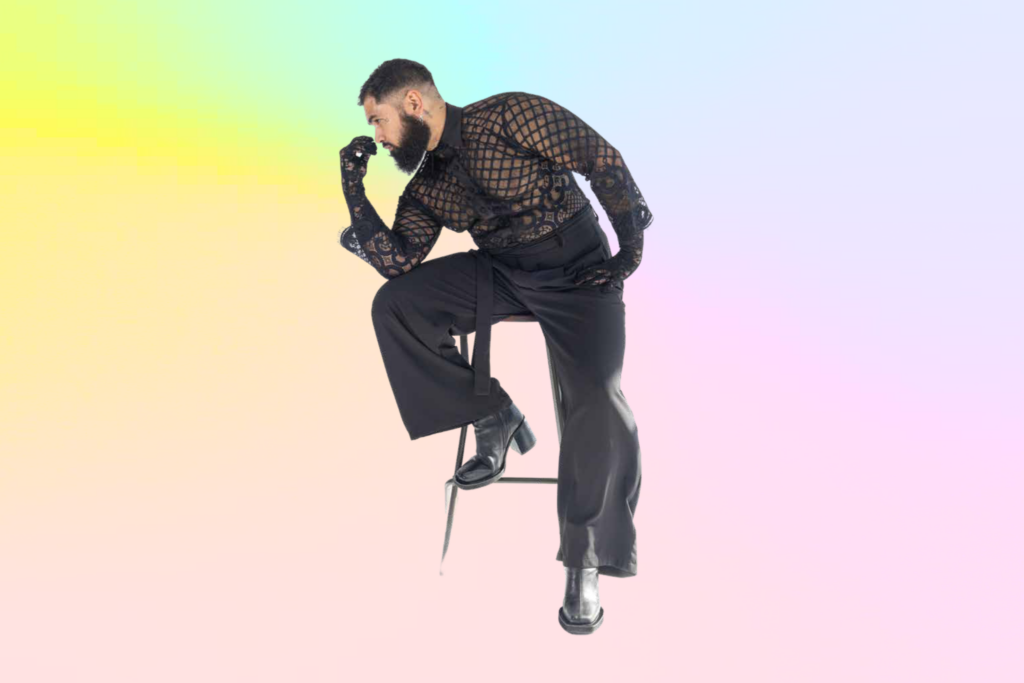
From coming out publicly while navigating the pressures of a growing music career to being open about sobriety, mental health, and loss, Craig Lucas’s journey has been shaped by a steady move toward honesty. Now four years sober and preparing for his third appearance at Cape Town Pride Mardi Gras, Craig reflects on queerness, representation, and what it takes to stay grounded. Alongside music, Craig’s work extends into community development through The Warren and Arlene Lucas Foundation, which focuses on early childhood development, youth empowerment, and education. His academic research in Development Studies sits alongside his creative work, driven by the same concerns around equity, access, and care. Craig speaks openly about coming out, recovery, mental health, and the role queer community continues to play in his life.
Pride Magazine: You’ve become one of the most visible queer pop artists in South Africa. What does representation actually mean to you at this point in your life?
Craig Lucas: Representation used to feel like pressure. Like I had to be the perfect example of a queer person. The right politics, the right softness, the right bravery, the right amount of visibility. I felt like I had to get it right all the time, because if I messed up, it felt like I wasn’t just messing up as Craig, but as “a queer person in the public eye.” Now, representation feels more like permission to be messy, soft, opinionated, emotional, sometimes annoying, sometimes inappropriate, sometimes deeply serious. Permission to change my mind. Permission to not always have the perfect answer. Growing up, I didn’t see many queer people who looked or sounded like me, or came from where I come from. I didn’t see queer people who were allowed to be contradictory or complex. So queerness felt like something I had to either hide or perform really carefully. Representation matters because it expands what’s possible. It widens the frame. It tells the kid watching from Elsies River, or some other small town that there isn’t just one way to be queer, successful, loved, or safe. You don’t have to be brave all the time. You don’t have to be palatable. You don’t have to be inspirational 24/7. You can just exist. And sometimes, simply existing is radical enough.
Pride Magazine: This is your third time performing at Cape Town Pride Mardi Gras. What keeps pulling you back?
Craig Lucas: There’s something really powerful about standing on that stage knowing the history. Pride didn’t start as a party. It started as resistance, because queer people were tired of being told to be quiet, small, and grateful. So even when we’re dancing, screaming, and kissing strangers, there’s still something deeply political about being visible and joyful in a country where queerness isn’t always safe or accepted. And to be fair, the topless, sweaty boys in the crowd don’t hurt either.
Pride Magazine: When you shared that letter coming out publicly in 2018, it struck a nerve across South Africa. Looking back now, what did it mean for you personally?
Craig Lucas: Writing that letter felt like survival. I was just trying to be honest enough to stay alive and sane. I had been carrying so much shame and so much self-hatred for so long that it had started to feel physical. Like something rotting inside me that I couldn’t ignore anymore. Once I said it out loud, once it existed outside of my own head, it stopped feeling like this all-consuming secret that defined me. It became a truth, not the truth of who I am. That distinction was everything. What I didn’t anticipate was how many people would see themselves in it. People from completely different backgrounds, ages, gender identities, careers, reaching out to say, “I thought I was the only one who felt like this.” That showed me just how isolating shame can be, and how powerful honesty is in breaking that isolation. Coming out publicly didn’t magically fix everything. But it did give me access to myself again. And that’s something I’ll always be grateful for.
Pride Magazine: The letter also sparked a broader conversation about family, stigma, and the real risks many LGBTQ people face when coming out. What would you want parents, families, and loved ones to understand about that moment in someone’s life?
Craig Lucas: Everyone’s coming-out journey is different, and no one owes it to anyone to come out on a specific timeline, or at all. Not being able to exist fully as who you are, does real damage over time. It quietly erodes your sense of worth and can negatively shape the decisions and choices queer people make in ways that aren’t always visible. So I think the most important thing for parents and loved ones to understand is that coming out isn’t necessarily about rebellion, attention, or the rejection of family values. More often, it’s about survival and truth. For many queer people, the fear is about losing love, safety, and a sense of belonging. Support, or the lack of it, can literally mean the difference between life and death. My good friend Soli Philander once said that coming out is really just a coming into yourself, an honouring of what’s already there. In a world that constantly pushes people into boxes around gender, sexuality, race, class, and age, we’re taught that only certain ways of being are allowed for certain kinds of people. A lot of joy, pleasure, and wholeness gets denied in the process, and there’s an entire system that benefits from that disconnection. So even if someone never comes out publicly, I still hope everyone is given the grace, at some point in their lives, to come into themselves. That, on its own, is already a quiet act of rebellion.
Pride Magazine: How has being queer shaped your music and the way you write?
Craig Lucas: For a long time, I was editing myself without noticing. Changing pronouns in lyrics, making things vague so they could seem more “relatable.” Once I stopped doing that, the writing felt closer to the truth and the process felt more enjoyable. There’s also a particular humour that comes with queerness that I love. The drama, the self-awareness, the ability to laugh while things are falling apart. That feels closer to how I actually experience the world. Being queer has shaped the strongest parts of me, and I’m grateful that I was born gay. Even if I had the choice, I wouldn’t choose any other way of being. I am also aware that I’m privileged to say that from a place of love and safety that many queer people don’t have. That’s why kindness within our community matters. When queerness is met with care and protection, it has the potential to be a real source of strength, not just individually, but collectively.
Pride Magazine: You’re four years sober now. Why was it important for you to talk about this publicly, especially within queer spaces?
Craig Lucas: Because silence nearly killed me. Substance use is such a big part of queer social life, and I understand why. Alcohol and drugs can feel like shortcuts to confidence, connection, feeling sexy, feeling free. For a long time, it was fun. Pretending it was all terrible doesn’t feel honest to me, and dishonesty is dangerous when it comes to recovery. Eventually it stopped being fun and became a way of hurting myself. And the shame around addiction kept me stuck there far longer than I needed to be. I talk about sobriety because I know how lonely it feels when you think you’re the only person struggling while everyone else seems to be coping just fine. Being sober doesn’t make me better than anyone. It just personally makes me happier. And more present. I can feel my feelings now, even the uncomfortable ones, and I kind of like that.
Pride Magazine: How did drag, ballroom culture, and queer art change your life?
Craig Lucas: Drag and queer art were the first spaces where I saw queerness celebrated instead of merely tolerated. I saw people take rejection, trauma, and pain and turn it into beauty, humour, and power. That was revolutionary!
It showed me that survival didn’t have to look quiet or apologetic. It could be loud, creative, joyful, and unapologetic. These spaces gave me language for myself before I had the words. They showed me that femininity wasn’t something to be ashamed of, that softness could be radical, that chosen family is not a consolation prize but a lifeline. I love seeing how queer art in South Africa is growing and becoming more inclusive. It’s no longer just one aesthetic, one body type, one narrative. There’s room now for more stories, more voices, more ways of being queer. That visibility matters. It saved me.
Pride Magazine: Why was starting of The Warren and Arlene Lucas Foundation a foundation so important to you?
Craig Lucas: Because grief needs somewhere to go. I started the foundation in memory of my late brother and sister-inlaw. It came from wanting to turn loss into something that still gives life. Losing them changed me. It made me question what actually matters. I grew up in Elsies River ,so I know what it means to grow up surrounded by potential but limited access. The foundation focuses on early childhood development, youth empowerment, food security, education, and dignity. That can look like supporting ECD centres with food and learning materials, employability programmes for young people, or arts and mentorship initiatives. It doesn’t feel like charity to me. It feels like responsibility. The work keeps me connected to real people and real needs beyond the bubble of the music industry.
Pride Magazine: You’re launching an exciting collaboration with Read to Rise at Pride this year. Tell us about that.
Craig Lucas: The Warren and Arlene Lucas Foundation will have a stand at Pride this year which I’m very excited about. It means people can come over and learn about the work we’re doing, and see how Pride can be a space for connection beyond the stage and the party. We’re also collaborating with an incredible organisation called Read to Rise. South Africa has a very real literacy crisis. Most children don’t have access to books at home, which effects confidence, academic performance, and long-term opportunity. We’re partnering with Read to Rise to raise both awareness and funds at Pride. It costs R50 to sponsor one child with a book, and our goal is to start at Pride and raise enough to sponsor 1,000 children in 2025. We’re encouraging donations of R50 or more where possible, but we’re asking for a minimum donation of R10, because even small contributions add up. Something that feels minor to us can genuinely change the trajectory of a child’s education. This collaboration reflects what Pride has always been about, community, visibility, and looking out for one another.
Pride Magazine: You’re also a PhD candidate in Development Studies, not the most typical popstar move.
Craig Lucas: Music is not the entirety of who I am. My PhD focuses on equity in access and quality of early childhood development for children with disabilities. That might seem far removed from pop music, but for me it’s all connected. My studies, my foundation, and my music all point in the same direction: community development, dignity, access, justice. I’m incredibly privileged to be able to pursue multiple passions, and I don’t take that lightly. Also, I genuinely enjoy being a student. I like reading. I like learning.
Pride Magazine: So how are you balancing all the various hats you wear?
Craig Lucas: Poorly! It’s a lot of coffee, not enough sleep, and a Google Calendar that looks genuinely alarming. Some days I feel like I’ve got it under control. Other days I absolutely do not. I’m trying to be more intentional about prioritising my health, boundaries and time. I’m someone who needs stimulation and purpose. This is me choosing a productive kind of chaos.
Pride Magazine: You’ve been very open about your mental health. Why is that something you feel so strongly about sharing?
Craig Lucas: Because we’re in a mental health crisis, and pretending otherwise isn’t helping anyone. I’ve been in therapy and on medication for about four years now. Sometimes it’s worked really well. Sometimes it hasn’t. It’s not a neat, linear journey. And it’s definitely not a one-sizefits- all fix. That’s why I’m open about it. I want people to know that struggling doesn’t mean you’re failing. It means you’re human. There’s so much stigma around mental health which keeps people quiet, ashamed, and isolated. Speaking about my own struggles helps me process them. Once you say something out loud it stops feeling all-encompassing and suffocating. Depression, anxiety, stress, can consume us to the point where they start to feel like who we are. We experience but are not these things. Looking at it that way gives me a bit of distance, a bit of perspective, and makes it feel just a little more manageable. The most important thing is that we speak up and ask for help if we can. There is absolutely nothing to be ashamed of. If you’re going through a tough time and feel stuck, reaching out can help. SADAG has free, confidential support available 24/7 on 0800 456 789, via WhatsApp at 076 882 2775, or through their Substance Abuse Helpline on 0800 12 13 14.
Pride Magazine: Finally, what do you hope people take away from seeing you on this cover?
Craig Lucas: That you don’t have to choose one version of yourself or shrink yourself into something easier to understand. You can be masc, fem, somewhere in between, or none of it at all. You can be loud and soft. Strong and fragile. Sober and fun. You can love pop music and policy research. You can be healing and still horny and messy AF. None of us have it all figured out – and that’s kind of the point. Just try to live honestly, do what makes you feel alive, and do as little harm as possible along the way.
You can follow Craig Lucas on social media for updates on his music and Pride performances, and follow The Warren and Arlene Lucas Foundation to learn more about its work and how to get involved.


